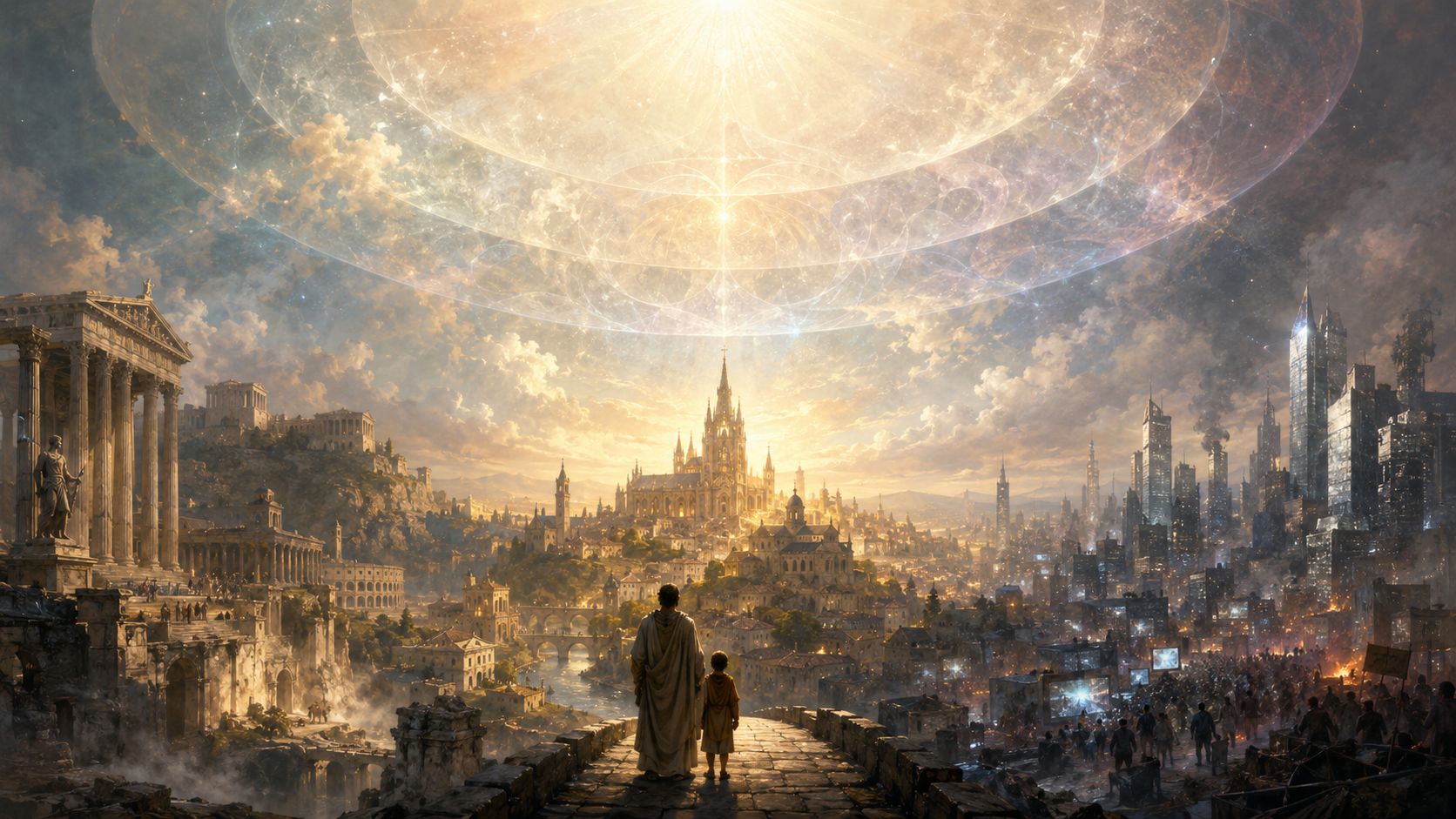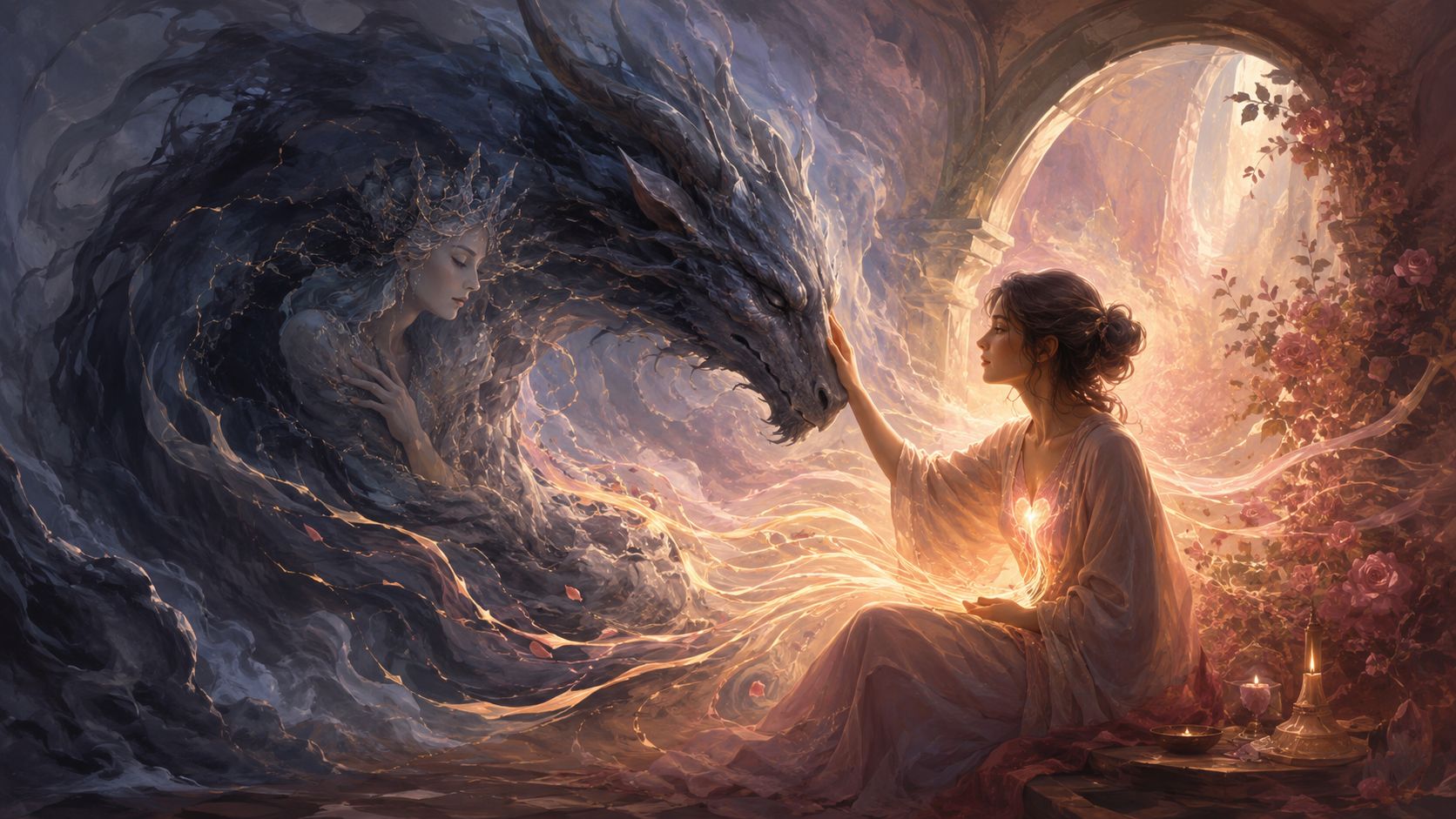

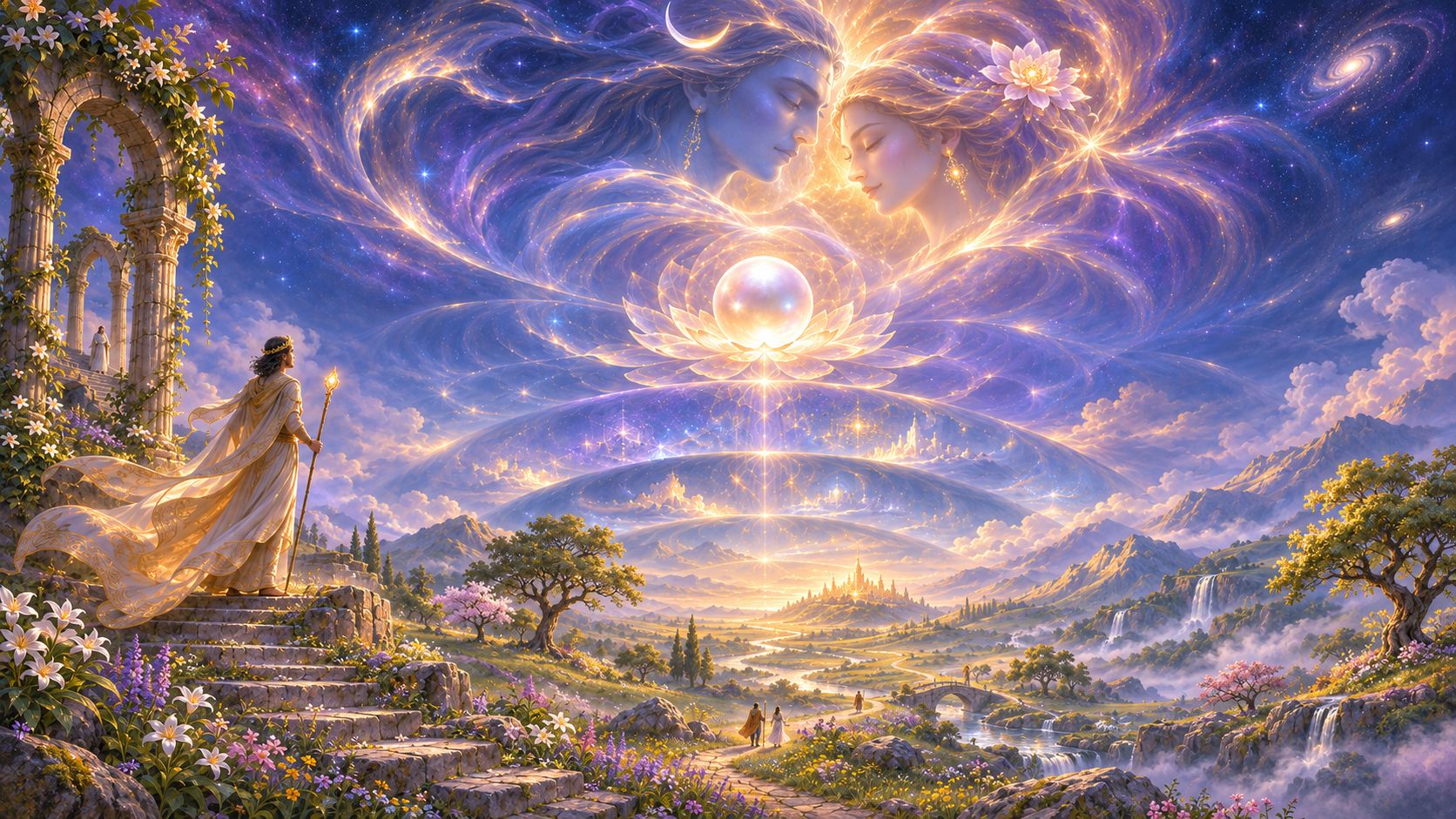
Why does the world exist, what is the purpose of evolution, and can God answer our prayers?
Recently, my friend Harry sent me the manuscript of a book he is working on. In it, he explores the Gospel of Thomas and its connections with the teachings of other spiritual traditions. At the end, he has included an ancient poem known as the Hymn of the Pearl, in an English translation by Willis Barnstone. He wrote that it had come to mind when I spoke about the Indian myth of Shiva and Parvati. In his view, both stories offer an answer to the question of why we are here.
The Hymn of the Pearl probably dates from the early centuries of the Common Era. It survives in Syriac and Greek as part of the apocryphal Acts of Thomas, although it was probably originally composed as an independent poem. Its author is unknown.
It tells the story of a prince whose parents send him from his native kingdom in the East to Egypt. His task is to retrieve a precious pearl guarded by a serpent. He leaves home, takes off his magnificent royal robe and sets out on his journey. In Egypt he adapts to the local people, adopts their clothing and food, and gradually forgets who he is and why he came. He lives in a foreign land and serves its king, although he himself is of royal birth.
When his parents learn what has happened, they send him a letter. It arrives in the form of an eagle, turns into a voice and awakens the prince, reminding him of his origins and his mission. He retrieves the pearl, takes off his foreign clothes and sets off for home. On his return journey, his magnificent original robe is waiting for him. When he sees it, he recognises himself in it. He puts it on once more and returns to his father’s kingdom.
The story is traditionally interpreted as the journey of a soul that descends into the material world, forgets its divine origin and eventually awakens to the knowledge of its true nature. The meaning of the individual symbols, however, remains open to different interpretations.
Harry’s observation reminded me of the ideas I explored in my recent article, The Dice Game of Shiva, about Richard Smoley’s book and its connections with the experiences of Christopher Bache.
Shiva, Parvati and the Return to Unity
In the Indian myth, Shiva and Parvati live in an original state of unity, immersed in their mutual love. Their peace is disturbed by the sage Narada, who suggests a game of dice. Shiva gradually loses all his attributes. Eventually, stripped of them entirely, he withdraws into the forest and enters meditation. Parvati suffers from their separation, seeks him out and, after further events, they are reunited.
Richard Smoley interprets Shiva as pure consciousness, which has no attributes of its own. Parvati represents prakriti: everything that can become an object of experience, including thoughts, feelings, images, energy and the material world. Shiva is the one who perceives; Parvati is everything that is perceived. Their separation gives rise to the world’s diversity, and their reunion restores the unity of consciousness and its manifestations.
In one sense, the prince in the Hymn of the Pearl resembles Parvati more closely than Shiva. He leaves the original unity, experiences separation and finally returns home. The difference is that Parvati does not forget Shiva, whereas the prince loses awareness of his origins and must be awakened.
We find a similar pattern in the experiences of Christopher Bache, described in his book LSD and the Mind of the Universe. During his experiments with LSD, he experienced a vision of two Cosmic Lovers who separated from an original unity. In his interpretation, the feminine principle descends into matter, where it loses awareness of its origins for billions of years. Over the course of evolution, matter gradually organises itself into increasingly complex forms, until beings emerge that are capable of becoming aware of themselves and their source. Bache saw this process as a gradual return to unity.
In his vision, the separation was a voluntary act of love. Yet it is precisely here that a question arises which I have been considering for some time. Why should the original unity divide at all? If God, or universal consciousness, is perfect and complete, why should it create a world and undergo separation, suffering and evolution? What could it gain from doing so?
Must God Know Everything?
In religious and philosophical traditions, we often encounter the idea of God as a perfect being who already possesses all knowledge. If that is so, the entire development of the universe could bring nothing genuinely new. Evolution would merely be the gradual disclosure of what God has known from the beginning.
From the perspective of individual consciousness, this would make sense. The prince remained a king’s son even when he had forgotten his origins. His awakening did not change what he was; it changed his understanding of himself. A person’s spiritual awakening could be understood in a similar way: we gradually discover our true nature, which has been present all along.
Yet we often say something else as well: that God comes to know Himself through us, that all living beings are His eyes, ears and sense organs through which He experiences the world. Every person, every animal and perhaps every manifestation of nature offers a particular perspective through which consciousness comes to know itself.
But if God already knows everything perfectly, what more can He discover through us?
Thinking about this question brought me back to Bernardo Kastrup and his analytic idealism. Kastrup regards consciousness as an ontological primitive: the fundamental reality that cannot be explained in terms of anything more basic. Everything else, including the material world, is, in his view, a manifestation of consciousness.
It does not follow from this that consciousness must be omniscient, that it has a plan prepared in advance, or that it pursues a particular goal. These are qualities attributed to it by certain theological traditions. The ontological primacy of consciousness does not, in itself, require them.
Kastrup has addressed this repeatedly in his books and interviews. He suggests that universal consciousness need not be self-reflective in the way that we are. It may experience and display immense intelligence without thinking about its own thoughts, formulating plans or consciously deciding what is to happen next.
In a 2020 interview with Michael Egnor, Kastrup explains that natural processes may be instinctive and spontaneous. Universal consciousness need not know where evolution is heading. It may respond to events as they unfold, following its own inner tendencies, without any predetermined plan.
Elsewhere, Kastrup develops a principle he calls an ‘implication from identity’: what something is determines how it behaves. The laws of nature describe regularities in this behaviour, but according to idealism their ultimate origin lies in the nature of consciousness itself.
This idea resonates strongly with me. If consciousness is the source of everything that exists, we need not ask what compels it to act or what higher purpose it serves. At this level, there is nothing more fundamental by which to explain it. Consciousness exists and manifests according to its own nature.
We may even relinquish the idea that God created the world in order to achieve something. Perhaps there never was a plan.
A World Whose Future Has Yet to Become Experience
Kastrup also addresses determinism, free will and the unpredictability of natural processes.
Philosophers and physicists have long debated whether the future of the universe is completely determined by its previous state. Pierre-Simon Laplace imagined a hypothetical intelligence that knew the exact positions and motions of all particles, as well as every law of nature. Under the classical deterministic view, such an intelligence would be able to calculate the entire future of the universe.
Yet even a deterministic world may be unpredictable.
Stephen Wolfram has drawn attention to the principle of computational irreducibility. Some processes follow simple, precise rules, yet their future states cannot be established by a shorter calculation. To know the result, we must allow the entire process to run its course. There is simply no computational shortcut.
This means that even if a system’s future state is entirely determined by its present state, we may still be unable to know it in advance. Determinism and predictability are two different things.
Kastrup draws on this idea when considering the universe as a whole. He allows that its development may be determined by its own nature, while the specific outcomes cannot be known without the process itself taking place.
Mathematical computational irreducibility does not, by itself, prove that God cannot know the future. It does, however, show that even a world governed by precise rules may have a future that cannot simply be calculated in advance.
For Kastrup’s philosophical model, a broader possibility is more important still. Universal consciousness need not know the outcome of its own manifestation. It need not plan or direct it towards a predetermined goal. The world may develop spontaneously, with its particular forms becoming actual only in the course of that development.
This also bears on the problem of free will. If our decisions arise from our desires, experiences and dispositions, they are to some extent determined by what we are. If they arose entirely at random, we could hardly regard them as our own decisions.
Kastrup therefore proposes a different understanding of freedom. Our decisions arise from the inner nature of the consciousness of which we are manifestations. At the level of universal consciousness, there is nothing external that determines its actions. All causes belong to its own nature.
Its behaviour may therefore be determined and yet free, in the sense that it arises entirely from itself. Kastrup ultimately concludes that at the level of universal consciousness, the distinction between freedom and necessity disappears. Consciousness acts according to what it is, and its own nature is the source of both its desires and its actions.
This seems to me one possible answer to the question of why evolution exists. The world must actually unfold for particular experiences to arise. Even universal consciousness need not know in advance everything that will emerge within it.
The Universe as God’s Dream
When I think about universal consciousness, I am drawn to the idea that the entire universe is God’s dream. Just as we live in our own dreams, universal consciousness lives in its dream. We and the whole of nature are characters within it.
When we dream at night, a world appears before us, inhabited by people, animals and countless other beings. In a dream, we may travel, speak to someone, and experience joy, fear or pain. The characters we encounter seem to exist independently of us. Yet the entire dream world arises within our consciousness.
What is interesting is that we generally do not know the plot of our own dreams in advance. A dream can surprise us, sometimes even frighten us. Although it all arises from our own mind, we do not know what will happen in the next moment. Dreaming unfolds spontaneously, and the story takes shape in the very act of experiencing it.
If we extend this analogy to universal consciousness, we arrive at an image of the world arising in a similar way. Consciousness manifests in countless forms and experiences itself through its own expressions. Unlike the characters of an ordinary human dream, however, individual beings in Kastrup’s model are genuine centres of subjective experience. Their lives and experiences have a reality of their own.
Kastrup uses the concept of dissociation to explain individuality. Individual minds are relatively separate streams of experience within a single universal consciousness. Each has its own perspective, memories and sense of personal identity, although their common ground remains the same.
And this is where I find an answer to the question of how God can be perfect and yet acquire new experiences through us. We need not understand perfection as complete foreknowledge of everything that will ever happen. We may understand it as the completeness of being itself, from which limitless possibilities of experience arise.
This picture does not require God to pursue any goal. A dream can arise without intention, and its story can be meaningful even though nobody planned it in advance.
As one of the characters in this dream, a human being may gradually come to recognise that their individual consciousness is an expression of universal consciousness. In this sense, God comes to know Himself through us. The capacity for self-reflection that emerged during evolution allows consciousness to become aware of its own existence from an individual perspective.
Can God Answer Our Prayers?
This understanding leads to another question. Since time immemorial, people have turned to God with their requests. They pray for their children’s health, for the recovery of loved ones, for protection from misfortune and for help in difficult circumstances. They believe that God hears them and can influence the course of events in their favour.
But how can God answer a prayer if He has no plan prepared in advance, does not deliberate over the fate of individual people, and the world develops spontaneously according to its own nature?
Kastrup addresses this question directly in an interview with Curt Jaimungal. He says he would not pray to universal consciousness as though it were a human being in heaven, considering people’s individual fates and deciding whom to help. At the same time, he acknowledges that our intentions may influence the world. Our mental activity is part of it and leaves its mark upon it.
This opens up the possibility of understanding prayer in a way other than as a request addressed to an omnipotent being outside the world.
If there is only one universal consciousness, our prayer arises within it. Our longing, hope, fear, love and compassion are events within the very consciousness from which the whole world arises. In this sense, prayer is part of the process that may influence how the world unfolds.
We can see this most readily in our own lives. When we pray for someone who is ill, our attention turns towards them. We may become more sensitive to their needs, more patient and more willing to help. Prayer may change our state of mind, our decisions and, through them, events in which we take part.
But the question goes further. Can prayer influence events without any direct action on our part? Could it, for example, alter the course of an illness or contribute to an unexpected resolution of a situation?
If we start from the idealist view of the world as a single consciousness, such a possibility is not ruled out philosophically. The separation between individual minds need not be absolute. Yet this does not establish that prayer can reliably change events at a distance, or that we know the mechanism by which it might do so. Analytic idealism itself offers no proof of such a capacity.
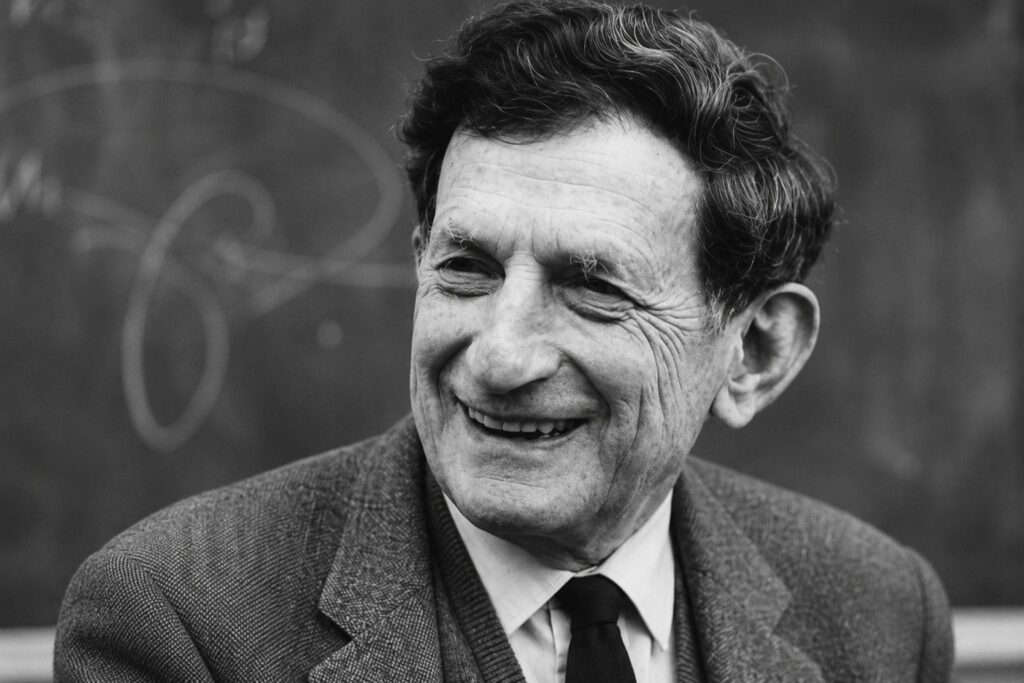
A certain inertia in the world is, however, probably a very good thing. If reality immediately adjusted itself to our every thought, desire and whim, the world would become uninhabitable. We all want different things, and our interests and ideas often conflict. We can imagine individual intentions interacting within a shared consciousness and sometimes even cancelling one another out. The world’s stability allows us to inhabit a common reality that does not change with every shift in our mood. Perhaps our thoughts and prayers really do enter into the unfolding of the world, but their effects form part of an immensely complex process in which countless other influences are at work. We cannot expect the world to submit to our individual wishes.
The world’s inertia may also be related to the very nature of material reality. David Bohm once described matter as frozen light. In the model of four levels of reality that I develop in Orbis loquens, the material world represents the most settled form of manifested consciousness. Between it and its source lie other levels of reality’s organisation: the dyad and the triad. At the material level, possibilities have become actual in concrete, relatively stable forms, governed by their own laws. We therefore cannot expect matter to respond immediately to every thought or wish. A degree of inertia is a condition for the existence of a stable world in which long-term processes can take place, organisms can arise and life can evolve. If our intentions do influence deeper levels of reality, their effects, in becoming manifest in the material world, must contend with its existing structures and laws.
In this model, the monad represents primordial consciousness, the dyad the level of information and differentiation, the triad the level of energy, and the tetrad the material world. The levels are interconnected, but each has its own laws. The more fully a possibility becomes concrete, the more firmly established its form and the more conditions must be met for it to change.
It is precisely this stability that makes continuity in the world possible. It allows our actions to have lasting consequences, organisms to maintain their structure and life to evolve over millions of years. A world that responded instantly to every passing impulse of consciousness could not provide a dependable environment for such processes.
At the same time, we need to distinguish between physical inertia, which we can measure, and the philosophical idea of consciousness gradually becoming established in material forms. The latter belongs to the interpretation of reality that I develop in Orbis loquens.
This brings us to the distinction between prayer as a request for a particular outcome and prayer as a conscious attempt to establish a relationship with the whole.
In the first case, we expect God to intervene in events and change them according to our wishes. In the second, we seek a connection with a deeper level of our own being, one that transcends our individual perspective.
These two forms of prayer often overlap in life. Someone may pray for a loved one’s recovery while also seeking the strength to accept a situation whose outcome they cannot control.
The traditional idea of a personal God raises a further difficulty, however. If God intervenes in response to our prayers, what happens when people wish for contradictory outcomes? Two people may pray for victory on opposite sides of a war. One prays for rain, another for sunshine. And what are we to make of a prayer that goes unanswered, although it arose from deep love and sincere conviction?
The idea of a God who chooses to grant some requests and refuse others raises questions about justice and suffering. Yet the failure of a prayer to achieve its desired result does not mean that the person lacked sufficient faith or did not deserve help.
If universal consciousness is the foundation of everything, its individual manifestations have their own needs, desires and interests. All are part of a single process whose outcome need not be known in advance. What is desirable from one person’s perspective may be incompatible with the needs of others.
We may therefore think of prayer as one way of participating in this process. Our request is real, our desire has weight, and our intention may influence the subsequent course of events. But we have no reason to assume that universal consciousness must conform to our expectations.
Let us return to the dream analogy. When a character in our dream fears something or longs for something, that experience forms part of the dreamer’s consciousness. The entire dream develops as one process. The character sees it from a limited perspective, whereas the dreamer’s consciousness encompasses the whole dream world.
If we are characters in the dream of universal consciousness, our prayer is also part of its experience. In this sense, God need not hear our request from outside. Our request takes place within Him.
Perhaps this is where philosophy meets the spiritual experience of prayer. A person addresses God as someone other than themselves, yet in a deeper sense turns towards the consciousness that is the foundation of their own existence. The feeling of having been heard may be an experience of this connection, although it does not necessarily mean that God has changed external events.
What Does the Prince Bring Back?
In the Hymn of the Pearl, the prince leaves home, experiences separation, forgets his origins and eventually returns. His true identity does not change during the journey. In this sense, he has lost nothing and does not need to gain anything in order to become what he already was.
Yet he brings back the pearl.
Its original meaning remains uncertain. Different interpretations see it as the soul, knowledge, salvation, or something to be rescued from the material world. In the context of our discussion, however, another possibility interests me: the pearl as a symbol of the experience acquired during the journey itself.
The prince returns to the original unity, but he has passed through a world he did not previously know. He has experienced separation, forgetfulness, awakening and return. His understanding now includes the experience of having been apart.
If we extend the story to universal consciousness, we arrive at the idea that the world may be a place where possibilities that previously existed only as potential are made actual. Each life is a unique event that must genuinely take place in order to become an experience.
The question of suffering remains. If the world is a manifestation of universal consciousness, suffering, too, belongs to its experience. Yet we cannot conclude from this that suffering is necessary to achieve some higher purpose, or that every instance of suffering has a hidden meaning. We can work to alleviate it while acknowledging that we do not yet understand the whole process of which we are part.
Here I also see a difference between Bache’s vision and Kastrup’s philosophical model. Bache experienced separation as a conscious decision by the Cosmic Lovers, made out of love. Kastrup’s conception allows us to think about evolution without any predetermined intention. Consciousness manifests according to its own nature, and the outcome of its manifestation gradually comes to light.
The question of why God created the world may therefore have no answer in terms of a purpose. The world may exist because manifestation belongs to the very nature of consciousness.
Our lives then acquire a particular significance. Each of us is a unique perspective through which universal consciousness experiences its own existence. What we experience takes place within a single reality, although it appears to us as a multitude of separate lives.
Perhaps this is what the pearl represents: an experience acquired during the journey and brought back by consciousness into its own unity.
If the world is God’s dream, then God comes to know His dream by dreaming it. We are its characters, and at the same time the ways in which that dream experiences itself.
Sources
The Dice Game of Shiva – an article on Smoley and Bache. Quintessence Forum
The Red Herring of Free Will in Objective Idealism – Kastrup’s article on free will and determinism. Essentia Foundation
The Evolution (or Not) of Consciousness – Kastrup on the spontaneous development of universal consciousness without a predetermined plan. Mind Matters
The Wrong Reasons to Believe in Analytic Idealism – Kastrup emphasises the objective stability of the world, independent of our wishes. www.bernardokastrup.com
Matter Is Frozen Light – Rupert Sheldrake and Mark Vernon discuss Bohm’s metaphor of matter. YouTube