Articles

Kozmická cesta k žiarivej perle

The World as a Dream of Consciousness

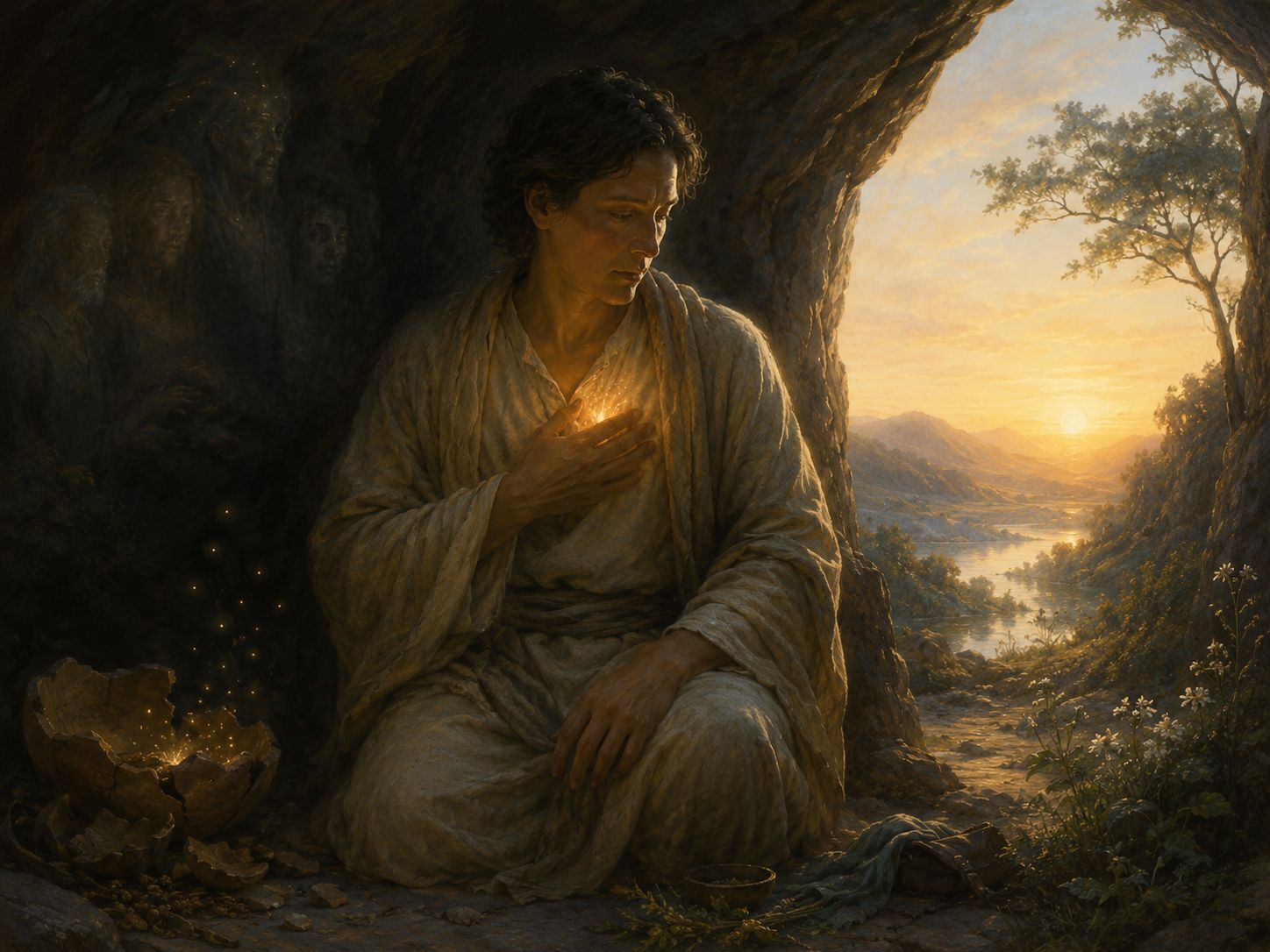
What if the universe is a dream unfolding within universal consciousness? Drawing on the ancient *Hymn of the Pearl*, the story of Shiva and Parvati, and Bernardo Kastrup’s analytic idealism, this article explores why the world exists, whether God can know the future, and what evolution might mean for consciousness itself. It also considers free will, the power of prayer, and why the physical world’s resistance to our wishes may be essential to life.

The World as a Dream of Consciousness Read Post »
Marc Henry - Water and Consciousnessa

From Water to Consciousness: The Legacy of Marc Henry

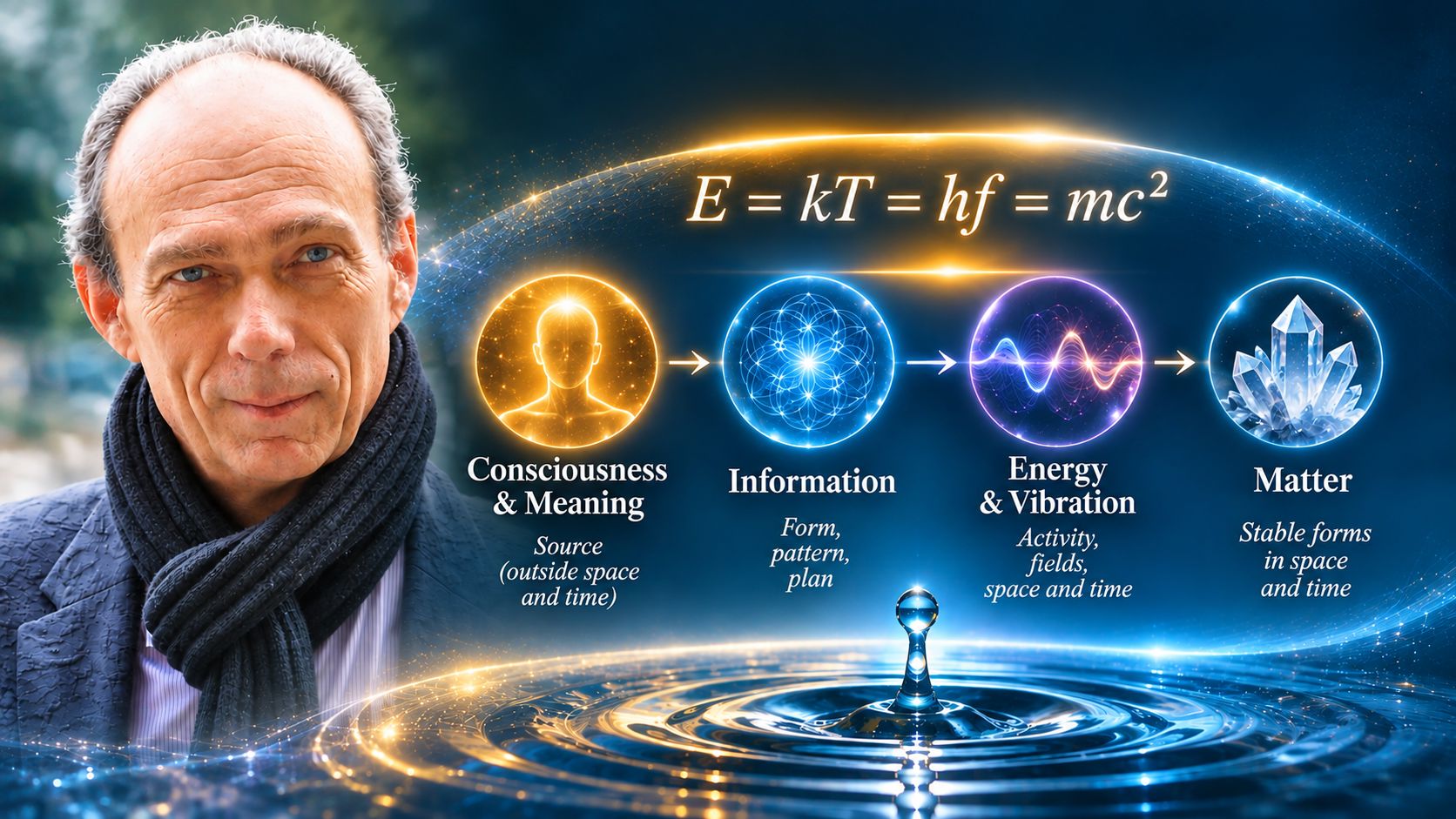
In 2021 Professor Marc Henry of the University of Strasbourg spoke at the Quintessence Forum about the nature of reality. He died three years later. This article returns to what he told us. Henry argued that reality unfolds in a sequence: consciousness, meaning, information, energy, matter. He joined the last three in a single line of physics, which the article explains step by step with a cup of tea, blue light and the Sun. From this grew the four-level model of reality developed in the book Orbis loquens. The article also asks whether Henry proved that consciousness comes first, and looks briefly at water, the sixth dimension and his three ways of healing.

From Water to Consciousness: The Legacy of Marc Henry Read Post »

Jean Gebser - The Ever-Present Origin

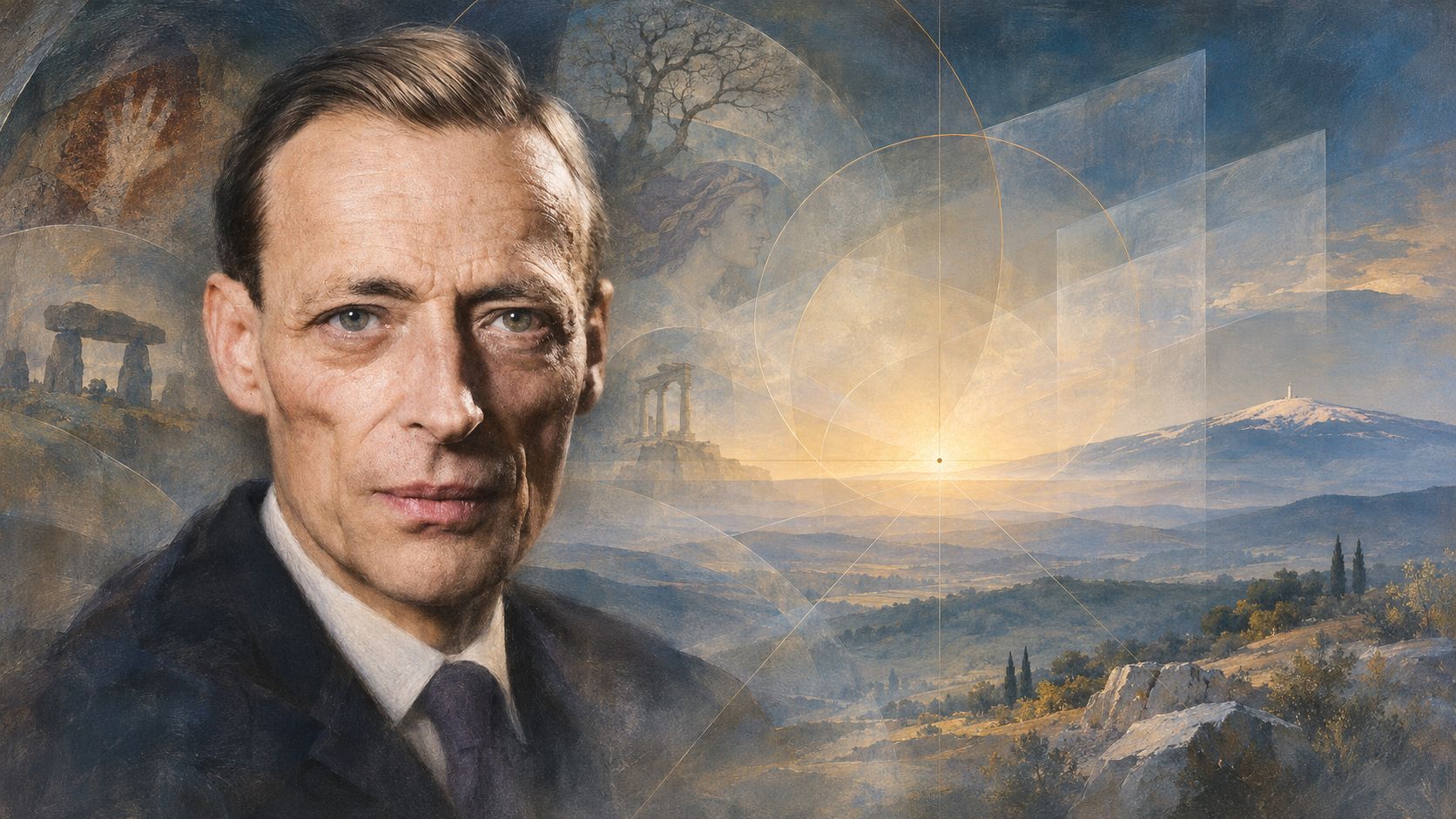
Jean Gebser and the Ever-Present Origin

In 1949 Jean Gebser published a study of how human consciousness has changed its form across history. He described five structures of consciousness: archaic, magic, mythical, mental and integral. Each adds a new dimension and none of the earlier ones disappears. This introduction follows his life between Germany, Spain, France and Switzerland, explains what he meant by origin, mutation and the efficient and deficient forms of each structure, and shows how he read Petrarch’s ascent of Mont Ventoux as the birth of perspective. It then turns to his diagnosis of our crisis, which reads as if written for our time, and to the integral, aperspectival consciousness he saw emerging in art and science.

Jean Gebser and the Ever-Present Origin Read Post »

the dice game Shiva and Parvati

The Dice Game of Shiva

Shiva and Parvati spent an eternity in each other’s embrace until a wandering yogi offered them a game of dice. They play, both cheat, and Shiva loses every game, until Parvati walks away with everything, down to his loincloth. Richard Smoley takes this Hindu myth and the Samkhya philosophy behind it and builds an account of reality on one distinction: that which experiences and that which is experienced. Shiva is consciousness, which has no attributes of its own and can only see. Parvati is everything that is seen. The article follows his argument from beginning to end and sets it beside Bernardo Kastrup’s analytic idealism and the four-level model of *Orbis loquens*. It closes with a comparison Smoley never made, with Christopher Bache’s vision of two Cosmic Lovers, which reproduces Samkhya step by step.

The Dice Game of Shiva Read Post »

Emperor gardener

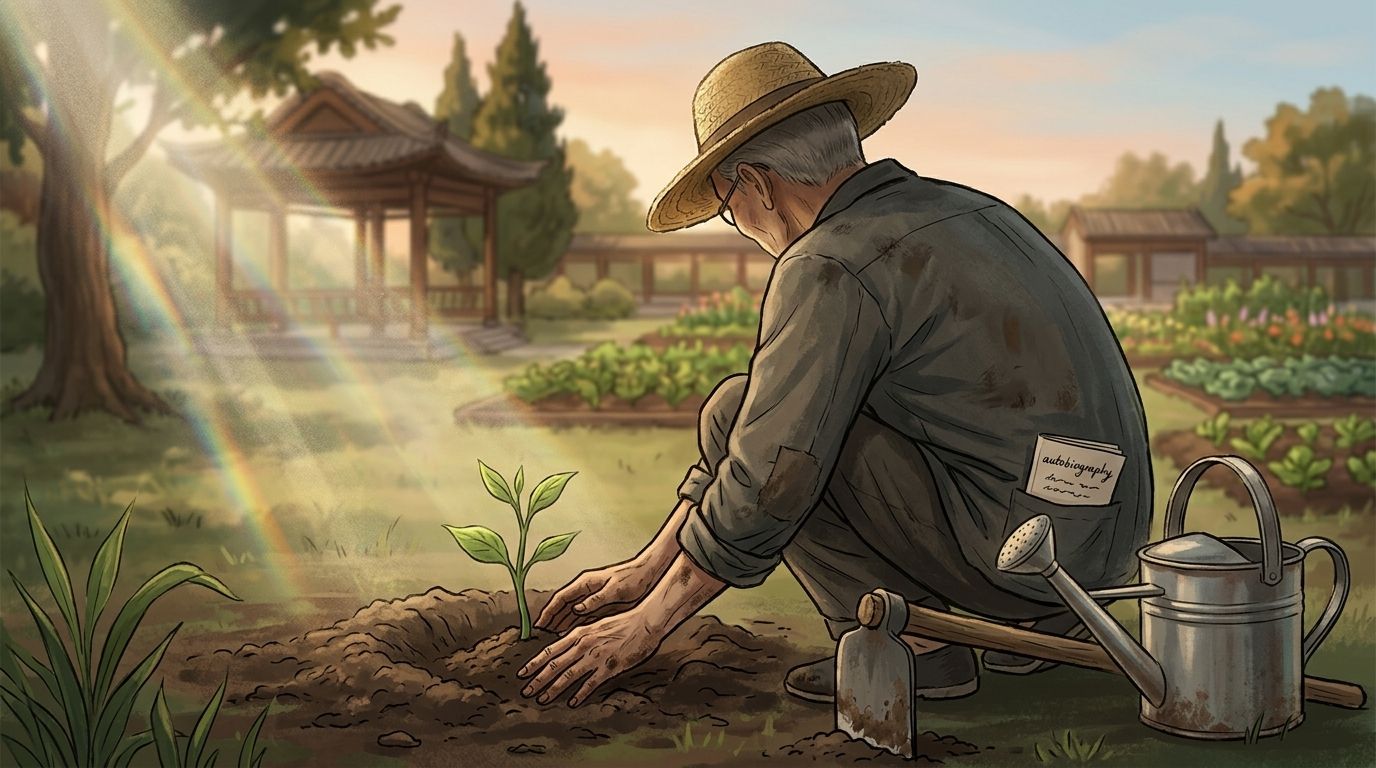
The Last Emperor’s Garden

The story of the last Chinese emperor, Puyi, who spent his final years working as an ordinary gardener after decades in a palace and prison, opens a profound reflection on our relationship with the material world. The article explores how modern digital comfort and anonymous supply chains distance us from reality, much like the walls of the Forbidden City once sheltered the monarch from the outside world. Through insights on reconnecting consciousness with matter and ancient spiritual traditions, it demonstrates that true spiritual growth does not require fleeing from the body and the earth. Instead, it invites us to bring conscious attention back into everyday manual labor and direct contact with nature.

The Last Emperor’s Garden Read Post »

covid - illness that became visible - wetiko

Covid: The Illness That Became Visible

Covid was biologically real, and for me it was also deeply personal: I ended up in hospital, came close to death, and spent months struggling to breathe. Years later, I return to the pandemic with a different question. Could it also have made visible a deeper illness of humanity, what Paul Levy calls wetiko?
The article explores the striking parallels between a biological virus and this ancient image of a parasitic disease of the mind. It looks at fear, isolation and social polarisation, Jung’s synchronicity, and Levy’s Buddhist image of the moon reflected on water. Finally, it asks whether the pandemic might be understood as a collective initiation, and whether we have understood what that experience was trying to show us.

Covid: The Illness That Became Visible Read Post »

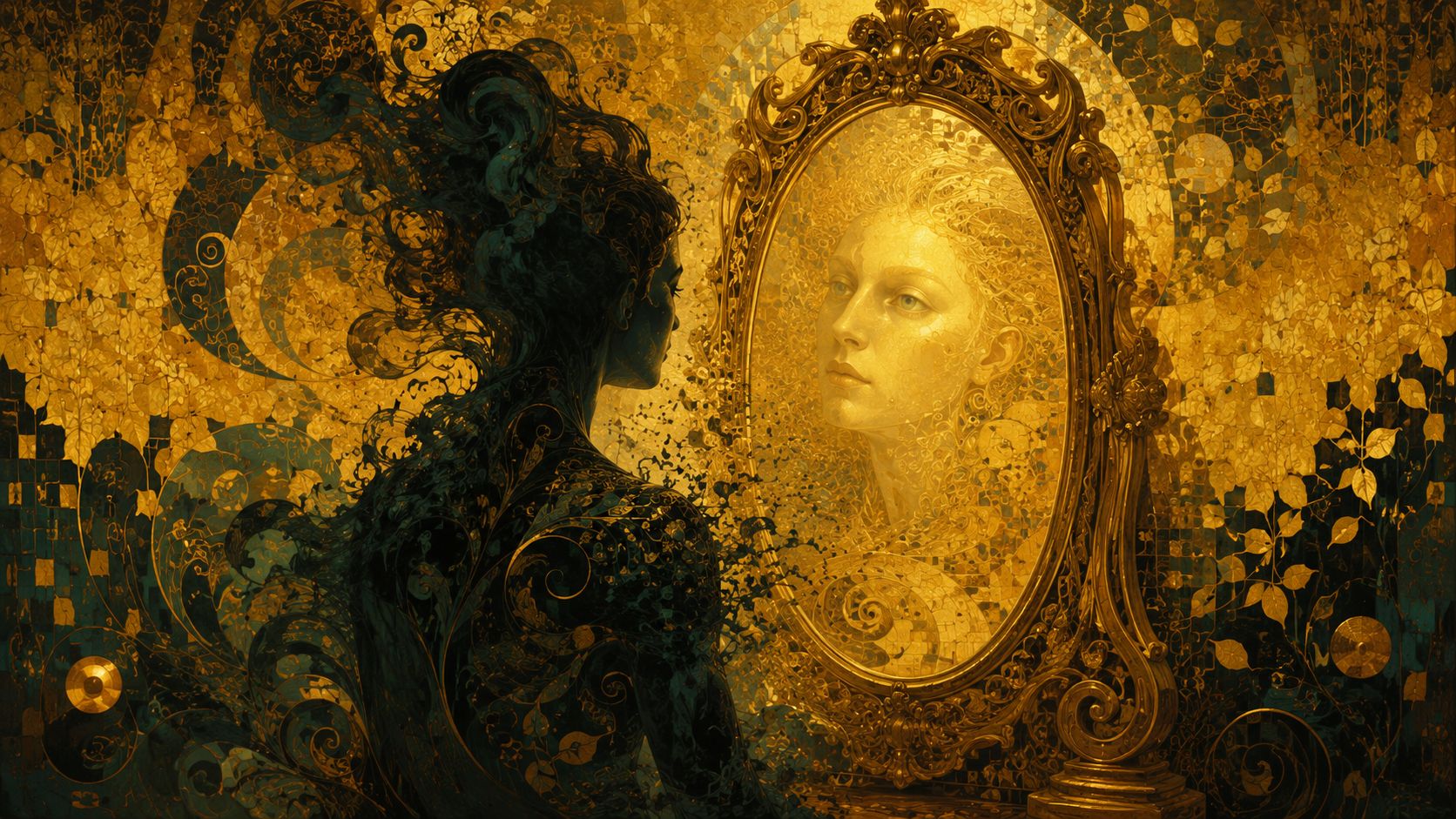
A lady in gold stands before the mirror, unaware of the influence of wetiko

Wetiko and Conspiracy Theories

Why do conspiracy theories hold such power over millions of people? Perhaps they respond to something real, yet misunderstand its nature. Across cultures, humanity has described wetiko as a mind virus or psychic force that enters through fear, hatred, trauma, and the unconscious shadow. It has no independent life of its own, yet it operates as if it were a living being, surviving by feeding on human fear and division. This article explores how projection turns genuine perceptions of evil into hostility towards particular people or groups, how opposing sides unconsciously sustain one another, and how awareness, creativity, inner work, and compassion can help us break the cycle without denying the reality of evil.

Wetiko and Conspiracy Theories Read Post »

Reason and Heart

Reason and the Heart: Why Intuition Needs Words

From the beginning of Quintessence Forum I have felt a tension in our community. Some of us say: see with the heart. Others hold that the vision must also be put into words, because without reason the heart wanders. This essay asks why language makes thought possible at all, and what artificial intelligence unexpectedly reveals about the limits of both reason and consciousness: a machine that has language without a heart vindicates both sides at once. Following Anselm’s faith seeking understanding and Bernardo Kastrup’s rational idealism, I argue that a paradigm is not a cage for God but the window through which some of us are able to see Him. The heart brings the image; reason gives it coordinates.

Reason and the Heart: Why Intuition Needs Words Read Post »

Wounded healer

The Wounded Healer

The wounded healer is an ancient archetype found in shamanic initiation, Christianity, Kabbalah, alchemy, and homeopathy. It speaks of a descent through illness, crisis, or inner darkness, from which healing knowledge can arise. Yet the wound is not healing in itself. Trauma becomes wisdom only when it is consciously passed through and transformed. This article follows that pattern from the shaman’s initiatory illness through Christ’s descent, Lurianic Kabbalah, alchemy, and the homeopathic law of similars. For the homeopath, it points to a central truth: personal inner work belongs to the deepest foundations of clinical practice.

The Wounded Healer Read Post »

Iamblichus and theurgy

Iamblichus and the Living World

Iamblichus taught that the soul descends fully into matter and cannot return by thought alone. The divine has to act, and it acts through material tokens that carry a higher presence. This essay follows that idea from late Neoplatonism through Dionysius the Areopagite and the Christian sacrament to Ficino, Paracelsus, and finally Hahnemann. Across the whole Western tradition the same conviction holds: matter is a carrier of higher meaning, and the potentized remedy is its late form.

Iamblichus and the Living World Read Post »

Alchemy and homeopathy

The Alchemical Root of Homeopathy

Alchemy did not die. It lives in spagyric medicines still made in Germany and in homeopathy itself. Paracelsus, the forerunner of Hahnemann, turned alchemy toward medicine and sought the quintessence: the refined essence of a substance freed from matter. What Paracelsus called the quintessence, Hahnemann approached through potentization. From Paracelsus through Mary Anne Atwood and Jung to Whitmont and Cicchetti runs one thread: the belief that every substance carries an inner nature, and that true healing also changes the healer.

The Alchemical Root of Homeopathy Read Post »

Daskalos Magus of Strovolos Fire in the Heart book

Stephanos Is Not the One Who Heals: Daskalos and the Image of the Human Being in Fire in the Heart

Kyriacos Markides, a sociologist from Cyprus, spent years with the healer and mystic Daskalos. Fire in the Heart presents the human being as a layered structure of body, soul and Pneuma, and healing as a force that passes through the healer rather than from him. Its central claim is that Mind is the substance from which all dimensions of existence are woven, which places the book beside today’s return to idealism. For a homeopath it grounds the unity of mental, general and physical symptoms, and the sense that the deeper self does the healing.

Stephanos Is Not the One Who Heals: Daskalos and the Image of the Human Being in Fire in the Heart Read Post »

Scroll to Top